

Cortisol, Explained (Without the Fear)
Why You Are Not A Night Owl

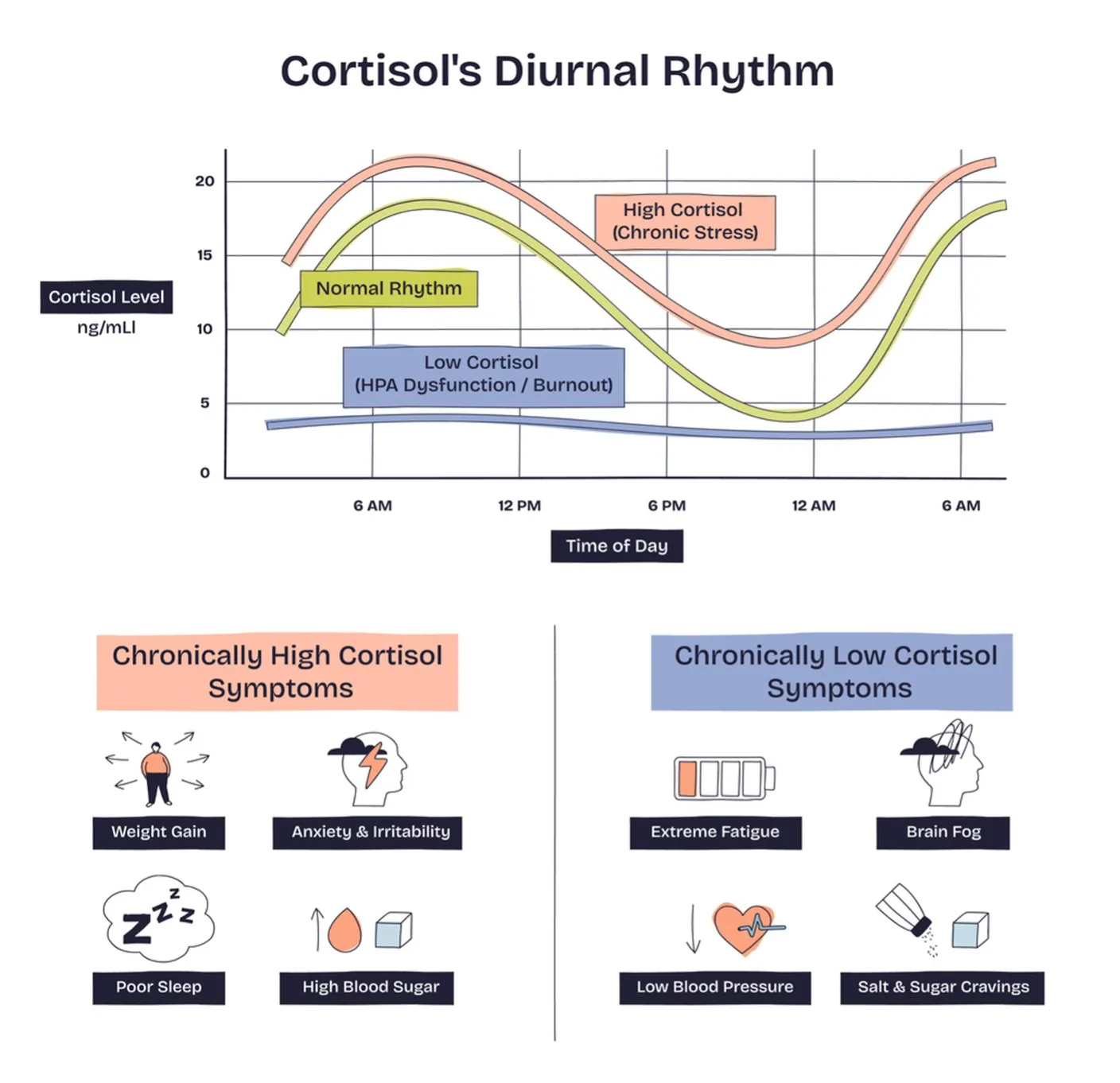
Cortisol has a bad reputation online. Half of the internet often blames it for weight gain, poor sleep, and burnout. While the other half says it doesn’t matter, all you need to do is eat less and move more. However, both are inaccurate. Cortisol itself isn’t the problem, but it also should not be ignored. In fact, cortisol is essential for survival. The issue is what happens when cortisol loses its rhythm.
What Cortisol Is
Cortisol is your body’s primary stress hormone. It’s regulated by the adrenal glands and plays a role in:
- Waking you up in the morning
- Regulating blood sugar
- Maintaining blood pressure
- Managing inflammation
- Helping your body respond to physical and emotional stress
Without cortisol, you wouldn’t be able to get out of bed, think clearly, or adapt to daily demands.
Cortisol Follows One Daily Rhythm
Cortisol is meant to follow a diurnal (circadian) rhythm:
- Highest in the early morning (6-8am) to help you wake up
- Gradually declines throughout the day
- Lowest at night (9:30-10pm) so your body can rest and repair
There is one human circadian rhythm. Biologically, there is no separate rhythm for “night owls.” When someone feels most awake at night and exhausted in the morning, it’s usually a sign of stress-related dysregulation (wired and tired), NOT a personality trait.
What Happens When Cortisol Is Too High
Chronically high cortisol often shows up as the classic “wired and tired” pattern.
Common signs include:
- Feeling overstimulated but exhausted
- Difficulty falling or staying asleep
- Awake at night, tired in the morning
- Little to no appetite when you wake up
- Elevated blood sugar
- Elevated blood pressure
- Insomnia
- Loss of appetite
- Exercise that feels draining instead of energizing
- Ongoing inflammation that doesn’t resolve
High cortisol keeps the body in a constant state of alert, making true rest nearly impossible.
What Happens When Cortisol Is Too Low
Low cortisol can look very different, but it’s just as disruptive.
Common signs include:
- Persistent fatigue
- Brain fog
- Anxiety
- Sugar cravings
- Salt cravings
- Exercise intolerance
- Bone loss over time
- Flu-like symptoms
- Feeling depleted no matter how much you rest
- Inflammation that sticks around
Low cortisol often develops after long periods of high stress, when the system can no longer keep up.
Why “Wired and Tired” Is Confusing
One of the most important things to understand is that both high and low cortisol can feel similar.
- Both can cause fatigue
- Both can disrupt sleep
- Both can impair focus and recovery
This overlap is why guessing or assuming cortisol is always “too high” often leads people in the wrong direction. There are different stages to adrenal dysregulation. Which stage you might be experiencing matters.
Cortisol Is Not the Enemy
Cortisol isn’t something to eliminate or suppress. It’s something to re-regulate.
Problems arise when:
- Stress is constant
- Recovery is insufficient
- Sleep is disrupted
- Blood sugar is unstable
- Exercise intensity exceeds recovery capacity
When this happens, cortisol loses its rhythm and that’s when sleep, hormones, gut health, and exercise tolerance start to suffer.
Gentle Disclaimer
This information is educational and not intended to diagnose, treat, or replace personalized medical care. Cortisol patterns are highly individual, and symptoms alone don’t always tell the full story.
If you suspect cortisol dysregulation, working with a qualified practitioner and using appropriate testing can provide clarity and prevent unnecessary guesswork.
Testing Cortisol: Why Timing Matters
Cortisol is not a single-number hormone. Because it follows a daily rhythm, when it’s measured matters just as much as how much is present.
A 24-hour salivary cortisol test measures cortisol at multiple points throughout the day, typically:
- Morning (20-30 minutes after waking)
- Midday
- Late afternoon
- Night
This allows us to see:
- Whether cortisol is appropriately high in the morning
- How steeply it declines during the day
- Whether it stays elevated at night or drops too low overall
Single blood draws can miss these patterns entirely.
The Takeaway
Cortisol is a messenger. When you listen to it instead of fighting it, it provides valuable information about how your body is coping with stress.
The goal isn’t to lower cortisol at all costs.
The goal is to restore its natural rhythm, so your body knows when to wake, when to fuel, and when to rest.
If your sleep feels flipped, your energy feels unpredictable, or your workouts no longer feel supportive, cortisol is worth paying attention to. Not with fear, but with curiosity and strategy.
Ready to Understand Your Cortisol Pattern?
If you’re recognizing yourself in any of these signs, the next step isn’t guessing, it’s getting clear data.
When I work with clients, we often use a 24-hour saliva cortisol test to see:
- How cortisol rises in the morning
- Whether it stays elevated throughout the day
- If it drops appropriately at night
- And how stress is truly impacting your nervous system and metabolism
From there, we create a personalized plan that supports regulation, recovery, and sustainable energy, not quick fixes or restriction.
If you’re ready to stop guessing and start understanding your body, I’d love to support you.
Book a free Discovery Call to explore how integrative coaching and hormone testing can help you restore balance and feel like yourself again.
Your body isn’t broken; it’s communicating. Let’s learn how to listen.
With love and wellness,
Brooke
Certified Integrative Health Practitioner | Founder, Kestra Health